Exclusive Interview: Marc Girard, Head of BMW Interior Design, explains the Vision ConnectedDrive Concept
For the second twelvemonth in a row, at the same Geneva Motor Show, BMWBLOG had the unique opportunity to interview Marc Girard, BMW's Head of Interior Design. Girard has worked every bit a designer for the BMW Group for 17 years. From 2000 to 2002 he developed the interior pattern for the BMW 1 Serial, the first vehicle of the brand to enter the compact segment.
Girard was head of Interior Pattern for the MINI brand from 2004 to 2006 and during his stay at MINI, he was responsible for the interior styling of the MINI Clubman. In 2006 he joined the BMW Interior Design team. In Apr 2009, he was appointed to lead the interior design at BMW Automobiles.
While the previous interview focused on the future of BMW interior pattern, the most recent chat revolved effectually BMW'southward newest and exciting Vision ConnectedDrive Concept. With his usual enthusiastic personality, Girard described the new concept for our readers.
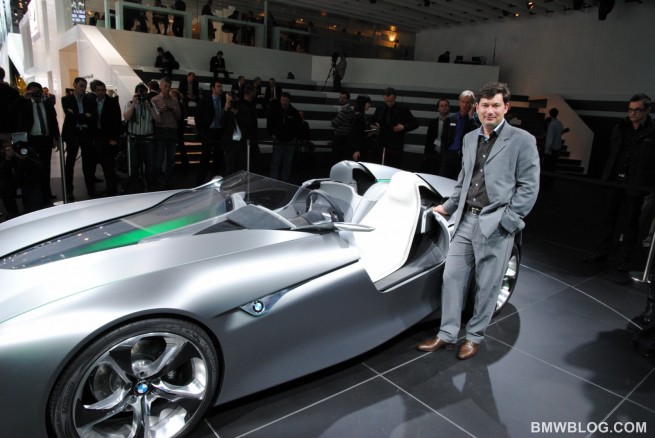 BMWBLOG: Marc, please describe to united states of america the new BMW Vision ConnectedDrive Concept.
Marc Girard: BMW Vision Continued Drive is the squad's creation. Information technology was a very exciting challenge, considering the job of this motorcar was to communicate what ConnectedDrive is, and this is a kind of a meta-concept. Information technology's an endeavour for designers to interpret a meta-concept into an object. So it was a tremendous challenge.
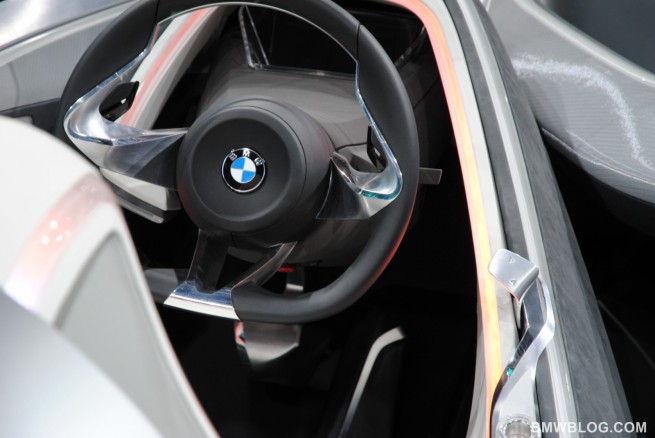
ConnectedDrive basically means iii things: safe, infotainment, convenience. We said the machine will be basically built on three layers, and each layer is embedding one of the concepts of ConnectedDrive. For example, safety has one layer which is all about driver orientation, and this layer is surrounded by orange lights, which has a lot to do with BMW's typical user interface or the nighttime. That'due south why we said – i layer, extremely driver oriented, surrounded by an orangish lighting.
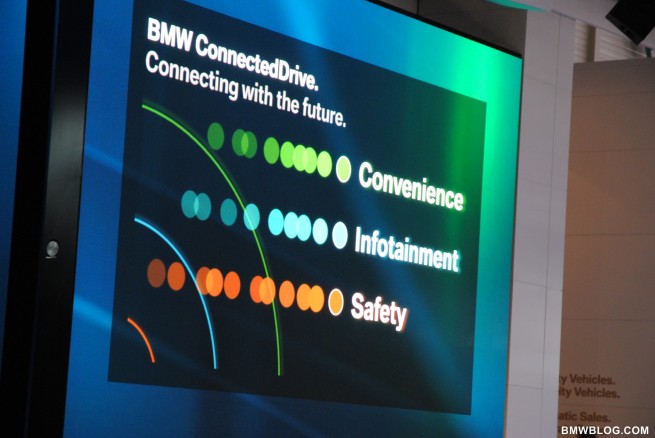
And we take the aforementioned philosophy with same items, same problems for infotainment – which is the second item of the BMW ConnectedDrive. For infotainment, nosotros want to focus on the interaction between the driver and the passengers. Nosotros have a kind of a "Yin and Yang" situation with the driver and passenger, nosotros have this gesture, which is basically coming from the driver and embracing the passenger together, and also surrounded by a blue light.
And then we have the convenience item which is the whole comfort result that the motorcar has, also surrounded by a light, this time green. We likewise wanted the complete color trim concept of the automobile to exist very achromatic.
BMWBLOG: What else can y'all tell united states of america near the layering pattern? Information technology's clearly post-obit the same lines as the Vision EfficientDynamics Concept.
Marc Girard: Exactly. The goal was to communicate exactly what we said with Vision EfficientDynamics. ConnectedDrive is a Vision, it'south a fantastic emotional concept. Only ConnectedDrive is something that we take in all our cars; we just put the things together and put it in an emotional fashion. It's exactly the aforementioned approach. And in terms of design you lot can recognize the typical BMW items, in terms of interior design: driver orientation – this automobile is an homage, a tribute to driver orientation – also put into the color textile concept, the driver is completely embedded inside one material and one color, very stiff asymmetry as well.
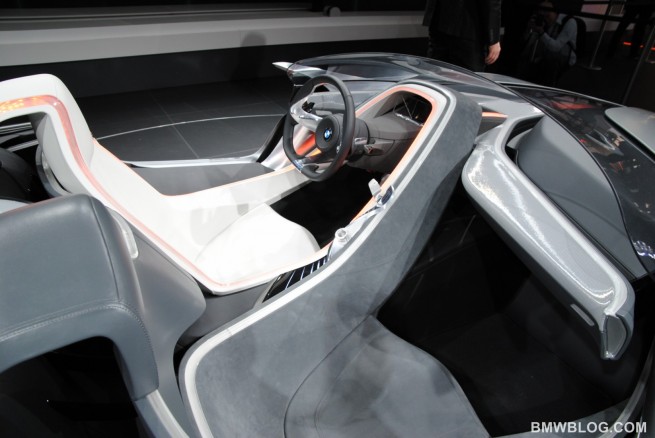
This is also a tribute to BMW interior pattern, we e'er have a very asymmetrical dashboard. Asymmetry is a very important business organisation for us at BMW blueprint, and we took information technology one step further, making the the exterior design asymmetrical also. The glass is completely embedded into the hood; the cockpit graphic of the hood is also asymmetrical.
And then layering is something we capture from Vision EfficientDynamics, Why do we exercise layering? To emphasize the Vision Dynamics philosophy into design, this ways subjective lightness. And nosotros believe that past stacking the volume – instead of making big volume – just stacking into different places – and using infinite, negative space between those layers, information technology brings a lot of lightness.
Yous can see that in the automobile, you lot besides encounter that from the top view, that these gestures, amplified by the layering aspects, are extremely dynamic but also extremely efficient, and bring out the lightness within.
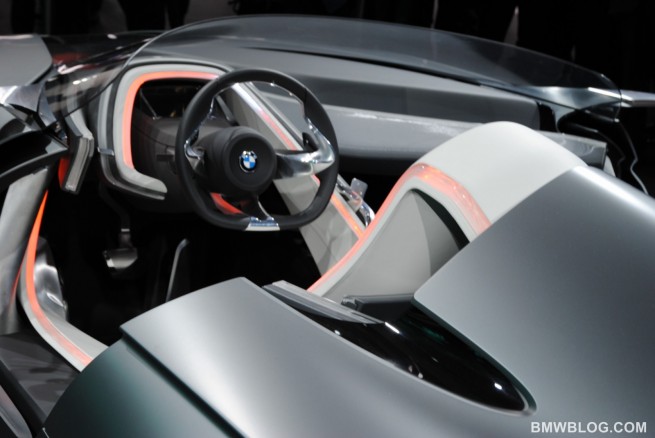
BMWBLOG: Would you say that the auto was designed from inside out?
Marc Girard: It's almost more inside-out, it was inside-out exterior-in, and it was a complete symbiosis betwixt exterior blueprint, interior design and within interior design – symbiosis between geometry, user interface, engineering science and color textile. What we say with ConnectedDrive is that it has to exist relevant to the term "connected".
BMWBLOG: So even the trims and colors were chosen to enhance the concept of lightness?
Marc Girard: Yes, that's correct. And as well enhancing the three layers. Each layer has its own materiality; you tin run into that the colour of the leather on the driver's seat is also different from the residual, but also the texture, semi-matte. The connection betwixt driver and passenger is "Nurburg", is completely matte, while the third layer is a glossy leather.
Then we play with 1 color, just likewise with different textures. This is the contrast we accept used. Yous tin employ contrast, it's the designer's all-time friend. You can utilize information technology as a color contrast, but y'all can also use it as a matte – glossy contrast.
BMWBLOG: How long did information technology take for the project to be completed?
Marc Girard: We completed the car – including the pattern – in basically iv-five months. Information technology was extremely short. This is a very intellectual approach to this car, we started in terms of philosophy, and the intellectual approach started right subsequently the summer break. Information technology took us a while to capture the philosophy, the meta-concept of this, to put information technology into an object.
We took a lot of time basically thinking what is the best, the perfect way to communicate ConnectedDrive into one object. It took us quite some fourth dimension and information technology was a fantastic challenge because it'south near more than than projection design.
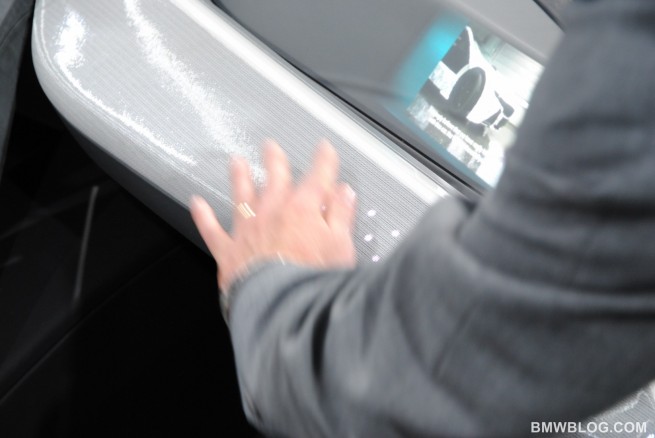
With user interface, y'all can accept some knobs, y'all can do a lot of things. You see, in this car there's almost nothing, so it has purity, reduction, has a lot to do with aesthetics. And we take the opinion that next step of the user interface has a lot to practice with gestures.
When the passenger is sitting in the automobile, nosotros want him to basically share a lot with the commuter. Driver orientation doesn't mean for u.s.a. that everything is defended to the driver and we don't care about the passengers, so we want to basically bring the connectedness betwixt driver and passenger likewise. But we too want that the advice between the rider and driver to appears in a very seamless approaches. There'south a slice of information which is basically captured on the passenger info display who could be, saying, "oh, that'due south a nice museum, that's a prissy exhibition, we should drive there", then "wait a infinitesimal, I will give you the course of navigation" and the information is basically swapped to the driver with a uncomplicated gesture and and then this information comes into the driver cluster information.
BMWBLOG: So how does the commuter deal with distractions?
Marc Girard: Really we believe the contrary. Due to the fact that we accept augmented reality in the Head-Up Display, you don't actually have to focus on some data in the mirror or some data backside the steering wheel. This means that you only have to stay focused on the driving and all the relevant information similar the NaviLane or DangerCalling are basically coming straight in front of y'all.
So you lot won't be distracted as a driver by looking in different direction, everything comes situation-related, in real time. That ways you take less information, just structured information. Information is coming to the signal where you really demand it, when there's a danger coming.
BMWBLOG: In my view, with a lot of the advanced technologies that we see these days, I experience like at that place is an information overload. Particularly in new cars, you take a lot of data overload in front of your optics, and as you said, not all of them are relevant or valuable. Then is this the reply to the problem?
Marc Girard: There is ane concern which is very important to us, the emotional browser. We need a browser in the car because actually ConnectedDrive does not mean that you go internet in the automobile and you go millions of information, you don't need that equally a driver. While as a passenger what you need is basically information which is fitted to you. The car knows you perfectly, it knows who you are, your favorite restaurants and your favorite exhibitions, and basically the car filters all this information by proverb "out of 150 museums in this new city you lot're visiting, there are two or three which are actually fitted to your needs and actually this one is the i we recommend". And so y'all merely have 150 museums to go through, just the emotional browser will select for yous a couple of information which are very restricted but focused on structure. That's the answer, this data overload is a fact and when you bulldoze, you don't want to exist overload, y'all just want to drive.
BMWBLOG: What is the best showcase of interface in one of the product cars?
Marc Girard: I volition requite you some examples, for the safety, infotainment and convenience. Prophylactic is definitely represented by the Night Vision, it'south something nosotros accept had for a couple of years already, which is a real tribute to active safety. An example for convenience is the Concierge service – in United states of america, when you need a restaurant or a hotel, or parking, you are basically helped past the Concierge at BMW ConnectedDrive. Too in terms of convenience, if you really want it and if you need it, you have Parking Help, where if the parking slot is big plenty for your car, it parks by itself.
So basically we bear witness the entire range from prophylactic features, agile safety feeatures to convenience – these are features that you tin can get in a 5 Series present. Hither we're showcasing a glimpse into the future, the whole BMW ConnectedDrive app store that we accept is also the next step – going in a seamless crossing, your personal device will be recognized in your car, your favorites which are on your personal device volition be taken into consideration by the automobile, and then the whole seamless approach is actually a good thing.
BMWBLOG: How do y'all determine what works best for your needs in a car where at that place are then many systems, similar y'all said: phone, iPods, iPhones, etc?
Marc Girard: We have to offering a complete range of functionalities considering every customer is unlike. What we know is that the customer is really attracted to seamless approach. They don't want to actively register, they expect that the car recognizes everything, what they like, what are their favorites, where they desire to eat, any. This has to be seamless.
I recall the future will have a lot to do with simplicity, with seamless, and this connectivity has to work in almost in a hidden manner. Y'all don't want to push and say "connectivity". Information technology will accept to happen by itself. We only to simplify the life of customers. I think that'due south why we're saying ConnectedDrive is a very emotional issue, nosotros don't want to list the 750 functionalities of ConnecteDrive, nosotros want to show here that ConnectedDrive is absurd, seamless, and uncomplicated, and it basically boosts the driving pleasure.
BMWBLOG: And now to switch back to interior design, when a customer takes a seat behind the wheel, what should he or she feel?
Marc Girard: I think information technology's emotional reactivity because when you sit down backside the cycle, the data you get is the one you demand, and at the right time. The approach for the time being is simplifying, structuring the information you lot accept. For the fourth dimension being y'all have lots of information – you have info behind the steering wheel, in the centre-in the central information display, in the Head-Upward Brandish. As a rubber feature to offering the customers the all-time information, we are repeating some of them.
If you find the Head-Upwards convenient, that's fine, but if you want to have this information in a cluster, y'all can have it also. I think in the hereafter this whole Caput-Upwardly Brandish will gain value and people will too experience confident that this display is very strong and very time to come-oriented, because for united states it's the best clue to boost driver orientation. In that location's no better user interface than a Head-Up Display when you say driver-orientation, that's the good thing about it.
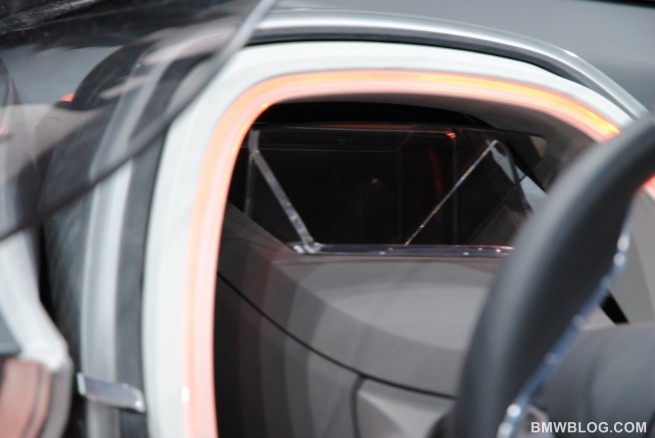
Therefore nosotros say in the futurity, it will exist mettlesome enough to say "yous have sure information that just appear on the Head-Up brandish and certain new data that just appears in the info cluster, and they don't come up in the same time, but in a different structure. A far away data appears maybe on the Caput-up display, and when in that location's a danger, present information is on the Head-Up display and suddenly comes first step towards you, with the 3D cluster. Those layers that we accept hither, there is a 3D data brandish underneath. It ways that when a piece of information is very critical, this information goes towards yous and says "wow, danger!" As the traffic light is broken or there'southward a car coming out or crossing, we have a dynamic approach to user interface. That's as well something yous want to boost in the future.
BMWBLOG: It'due south been said for a long time that exterior design of BMWs drives customers to the brand and recently interior blueprint has been received really well by everybody. So how do you manage this heavy responsibility? Keeping up with the exterior design and making certain that people in the car volition feel the same emotional with the brand?
Marc Girard: To be honest, I don't have a trouble with that, I retrieve the time you lot fall in honey with a car has a lot to practice with exterior design, but if you lot want to keep this love affair for a lot of years, so the interior design needs to fit, because when you become into the car, love at commencement sight can be practiced, but you leave the car from the inside. And if you are disappointed by the interior blueprint, you will not fall in love with this auto again.
So this love story has a lot to practise with beloved at showtime sight- outside design – and a long term love affair with the interior design. So that's a combination of both.
BMWBLOG: What practise you see every bit the future of BMW in interior design?
Marc Girard: The future has so many issues. First, we volition go on our icons, like driver orientation, iDrive in a single panel, subjects in lightness, merely to boost the EfficientDynamics philosophy. Those are items that nosotros will keep on renewing and reintegrating.
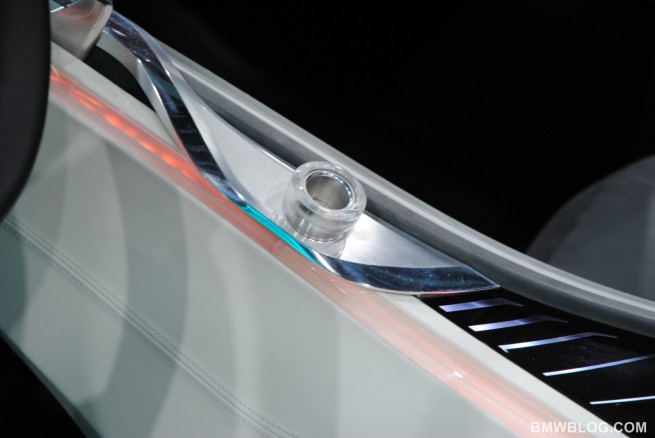
Simply there are two issues that for me are very important – the emotional way of user interface – getting away from a very on-screen, second pattern to a 3D emotional approach.
2nd thing is lighting – I personally run into low-cal design equally a fourth dimensional interior design, that you can ascertain a contrast in absence of light with the colors choice. Nosotros tin can besides boost driver orientation with the different calorie-free approach: condom, very extremely driver orientated, convenience, infotainment, merely through light design gives you complete different approach to the geometry of the automobile.
So I think in that location's a lot to do with light and information technology is something we are experiencing for the time being. And this car was a perfect inkling to emotionalize the light design and make an experiment approach to it.
BMWBLOG: Marc, Give thanks you lot for your time.
Source: https://www.bmwblog.com/2011/03/14/exclusive-interview-marc-girard-head-of-bmw-interior-design-explains-the-vision-connecteddrive-concept/

Post a Comment for "Exclusive Interview: Marc Girard, Head of BMW Interior Design, explains the Vision ConnectedDrive Concept"